Chrome Polishing: From Pitted to Mirror
How to polish chrome on motorcycles and cars, from light tarnish to heavy pitting. Chemical vs mechanical polish, winter salt protection, and maintenance.
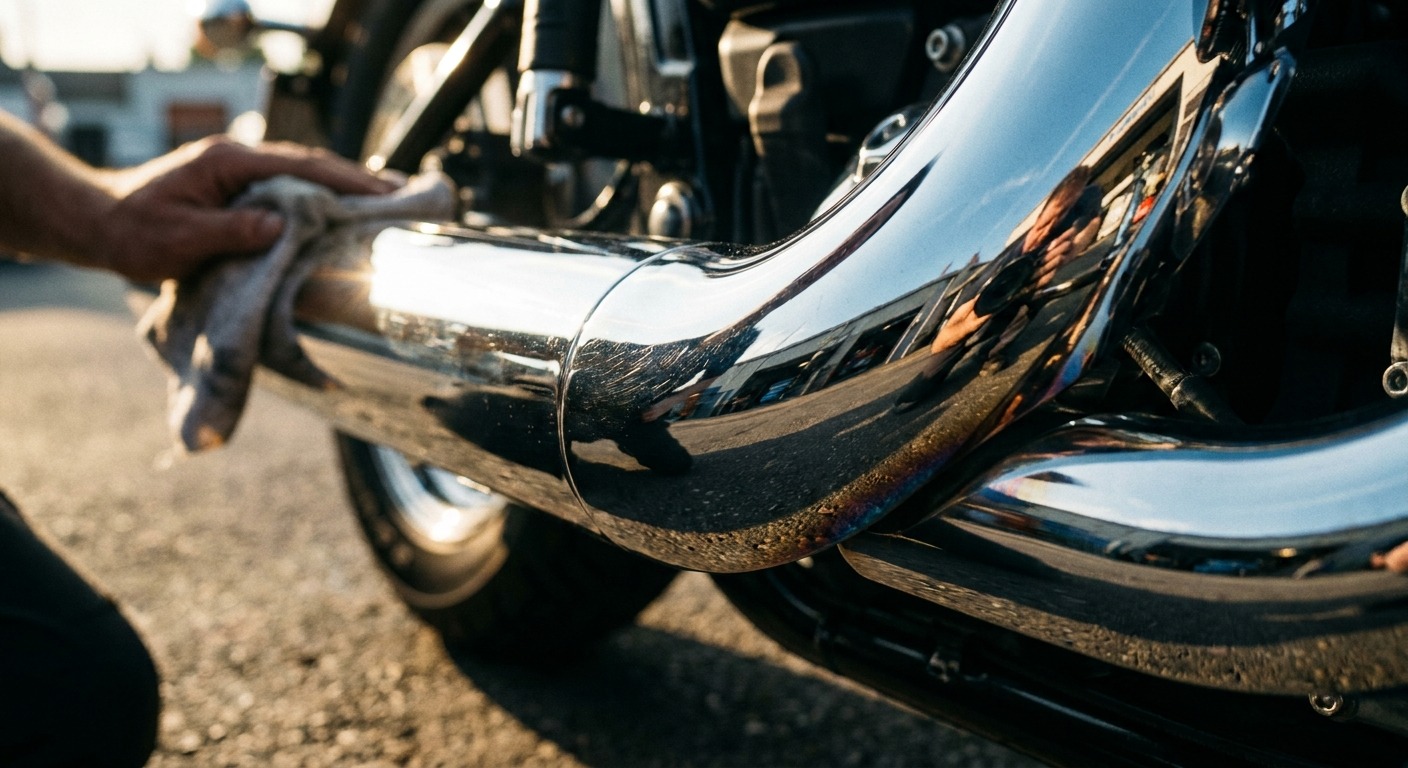
Chrome, when it is right, is the most reflective and eye-catching finish on any vehicle. A set of perfectly polished chrome exhaust pipes or a mirror-bright bumper catches sunlight and stops people in their tracks. When chrome goes wrong, though, it is one of the most frustrating surfaces to deal with. Pitting, flaking, rust bubbles, and dull haze all show up on chrome with zero mercy, and the path back to a mirror finish depends entirely on understanding what chrome actually is and how far the damage has gone.
What Chrome Plating Actually Is
Chrome plating is not a single layer. It is a sandwich of metals electroplated onto a base metal, usually steel. The stack: steel base, copper for adhesion, a thick nickel layer for corrosion resistance, and a very thin chromium layer on top. That chromium gives chrome its blue-white mirror appearance, and it is astonishingly thin at only 0.25 to 0.5 microns.
This matters because the chromium is the hardest part of the stack but also the thinnest. The nickel underneath is softer and tarnishes. Polish through the chromium to the nickel and you get a surface that looks yellow, loses its mirror quality, and tarnishes rapidly. The goal is always to use the least aggressive approach that achieves the result.
Grades of Chrome Damage
Not all chrome problems are fixable with polish. Understanding what you are dealing with saves time and frustration.
- Light haze and water spots: Surface contaminants only. The chromium layer is intact. A quality chrome polish removes this easily by hand. This is the most common condition and the easiest to fix.
- Tarnish and yellowing: The chromium layer has thinned in spots, allowing the nickel to show through. Polish can improve this but cannot fully restore the mirror quality because the chromium is compromised. You are polishing nickel, not chromium, in the affected areas.
- Surface pitting: Small pits in the plating from road salt, chemicals, or age. Light pitting can be polished to reduce visibility, but pits cannot be filled. Heavy pitting means corrosion has penetrated into the copper or steel beneath.
- Flaking and rust bubbles: The plating has delaminated. Rust forms between layers, pushing chrome up in bubbles that flake away. This is terminal. The only fix is stripping and replating.
For light haze through moderate pitting, polishing is the right approach. For flaking and severe pitting, polishing is cosmetic at best and will not stop the ongoing deterioration.
Chemical Chrome Polish vs Mechanical Polishing
Chrome polishes fall into two broad categories, and understanding the difference prevents costly mistakes.
Chemical chrome polishes use mild acids or chemical agents to dissolve tarnish and oxidation without relying heavily on abrasion. These are gentler on the chromium layer and work well for light haze, water spots, and minor tarnish. They are the right first choice for chrome in good condition that just needs cleaning and brightening. Apply with a soft cloth, work in small sections, and buff off with a clean microfibre towel.
Mechanical polishes rely on abrasive particles to physically cut through tarnish and surface imperfections. These are more aggressive and remove material with every pass. They are appropriate for moderate tarnish and light pitting where chemical polish alone is not enough. Use a dedicated chrome-specific mechanical polish, not a general metal polish. The abrasive grade matters enormously here.
Tip: Always start with chemical polish and step up to mechanical only if needed. You can always get more aggressive, but you cannot put chromium back once you have polished it away. Think of it the same way you would approach paint correction: start with the least aggressive method and increase only as necessary.
Aluminum Polish on Chrome: Just Do Not
This comes up constantly. Aluminum polish is formulated for a soft, porous metal. The abrasive particles are coarse, designed to cut through aluminum oxide on a comparatively soft surface. Chrome is a completely different material: very hard but very thin plating over softer nickel.
Using aluminum polish on chrome removes the thin chromium layer rapidly, exposing the nickel beneath. The nickel polishes to a decent shine initially, fooling people into thinking they have done a good job. Within days, the nickel tarnishes to a dull yellow because it lacks chromium's corrosion resistance. Now you have a surface requiring constant polishing to look mediocre, when a proper chrome polish would have maintained the original plating for years.
The same caution applies to general-purpose metal polishes not formulated for chrome. If the label does not say it is safe for chrome plating, assume it is not.
Maintaining Chrome Through Canadian Winters
Canadian winters are uniquely brutal on chrome. Road salt, which is primarily sodium chloride but often mixed with calcium chloride or magnesium chloride in colder regions, is the primary enemy. Salt solution splashes onto chrome surfaces and sits there, attacking the plating through every micro-crack and imperfection. The freeze-thaw cycle forces salt solution in and out of these tiny defects, accelerating the corrosion from the inside out. This is why chrome pitting in Canada tends to be worse than in southern climates, even on relatively new vehicles.
Across Ontario, car enthusiasts in towns large and small deal with this reality every winter. Communities like Bracebridge, Pembroke, and Arnprior all sit along salted highways where even a short winter drive coats every surface in brine. In places like the Ottawa Valley, where the combination of military families, rural culture, and long winters creates a dedicated car community, people take winter chrome care seriously out of necessity. If you look at the local resource at petawawa.com, you will find the kind of small-town community hub that connects people around shared interests, including vehicle maintenance. Similar communities thrive in Belleville, Barrie, and North Bay, where car and bike culture runs deep despite, or maybe because of, the challenging conditions.
The protective approach for winter chrome has several layers. Before the first salt hits the road, clean and polish all chrome surfaces thoroughly. Then apply a protective barrier. Options include:
- Chrome-specific sealant: Creates a chemical barrier that prevents salt from contacting the plating directly. Lasts several months and can be reapplied mid-winter.
- Paste wax: Traditional carnauba or polymer wax works as a physical barrier. It breaks down faster than a sealant but is easy to reapply.
- Ceramic coating: The most durable option, lasting through an entire winter without reapplication. The hydrophobic properties shed salt water before it can sit and attack. Our ceramic coating guide explains the technology in detail.
- Petroleum-based protectants: Products like dielectric grease or petroleum jelly work on small components like bolts and brackets where aesthetics are secondary. They provide excellent corrosion protection but attract dirt.
During winter, rinse chrome surfaces with fresh water after exposure to salt whenever possible. A touchless car wash once a week does more for chrome preservation than any product application alone. The goal is to minimize the contact time between salt and chrome.
Polishing Technique for Best Results
Chrome polishing is a hand job. Machine polishers are unnecessary and risky because concentrated heat damages thin plating, and the rotation catches on edges, bolt heads, and contours common on motorcycle and classic car chrome.
Use a soft cotton cloth or polishing microfibre. Work in small sections, roughly six inches at a time. Apply a thin layer of polish, work it with moderate pressure in a back-and-forth motion rather than circles, and buff off with a clean cloth before moving on. Our microfibre towel guide covers what makes a good polishing cloth.
For pitted chrome, fill the pits with polish and work the area more aggressively to smooth the edges of the pitting. You will not fill the pits completely, but you can reduce their visual impact and slow further corrosion by removing the rust from inside them. After polishing pitted areas, a sealant or wax in the pits provides a temporary barrier against moisture.
Perfect chrome is addictive. Once you see one exhaust pipe go from dull to mirror, you will not stop until every piece of chrome on the bike or car matches. Budget your time accordingly.
When Replating Is the Answer
When chrome is flaking, deeply pitted, or visibly rusted, polishing is a temporary cosmetic fix at best. The real solution is stripping and replating. Professional chrome plating involves stripping the old plating chemically, repairing the base metal if needed, then applying new copper, nickel, and chromium layers.
The cost is significant. Replating motorcycle exhaust pipes runs several hundred dollars. Classic car bumpers can reach well into the thousands. But the result is genuinely new chrome that lasts decades with proper maintenance. Reputable plating shops in Canada are concentrated in southern Ontario and the lower mainland of British Columbia.
The alternative for restoration is spray-on chrome, a specialized paint system that mimics chrome's appearance. It is less durable and less reflective than real plating but costs less and covers surfaces that are difficult to dip-plate. For motorcycles and show cars where authenticity matters, traditional plating remains the standard.
Whether you are maintaining existing chrome or restoring neglected pieces, the fundamentals are the same: identify the damage level, choose the right product, use the least aggressive technique that works, and protect the result. Chrome rewards careful attention with a finish that no other surface treatment can replicate. For more on the broader detailing process for motorcycles, including care for every other surface type, see our motorcycle detailing guide.