Boat Detailing: The Complete Guide for Canadian Boaters
Complete boat detailing guide for Canadian freshwater and saltwater boaters. Hull wash, topsides, vinyl, canvas, and seasonal care tips.
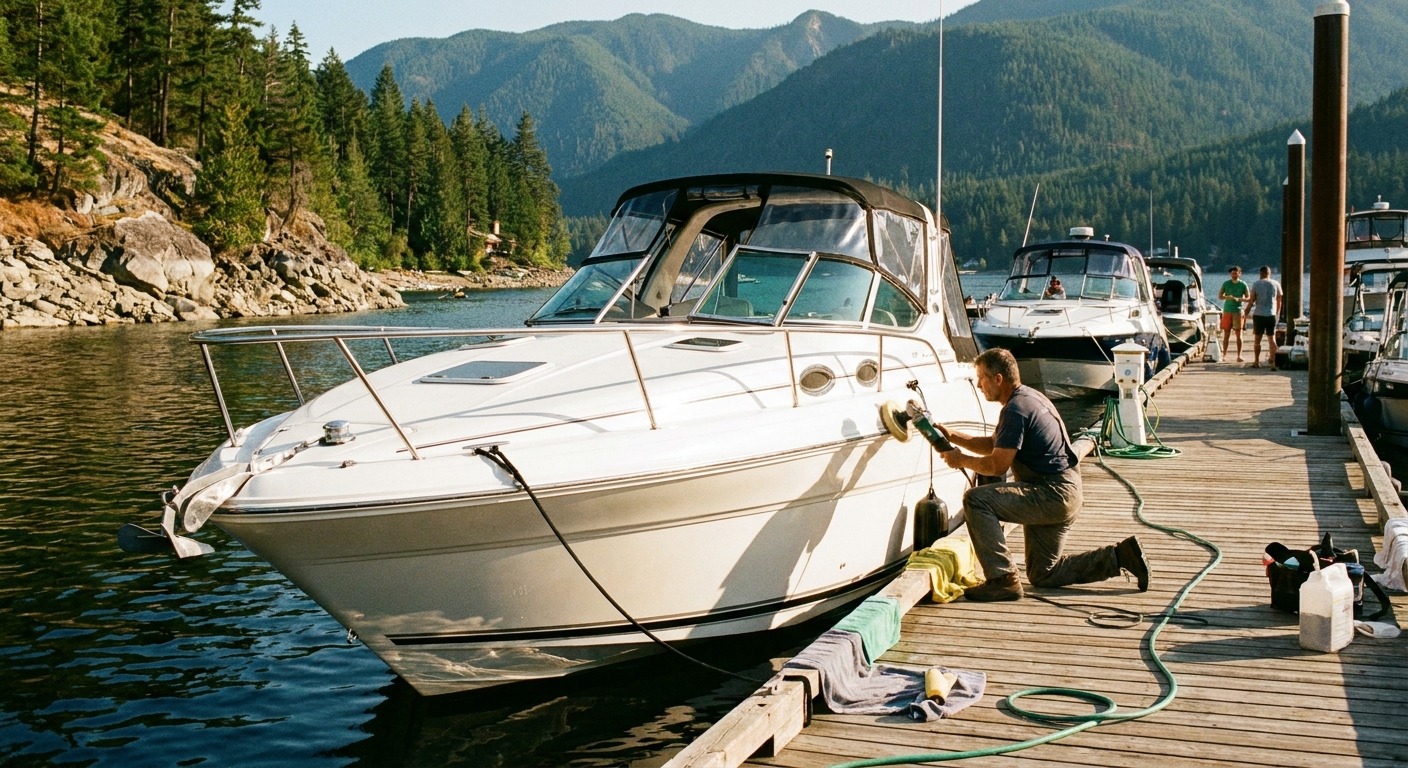
Boat detailing is not car detailing on water. The materials are different, the contaminants are worse, and the stakes are higher because marine finishes take a beating from UV, salt, minerals, and biological growth that land vehicles simply never face. If you own a boat in Canada, you already know the season is short and the punishment is real. This guide covers every surface on your vessel, from hull bottom to canvas top, with specific advice for Canadian freshwater and saltwater conditions.
Understanding Your Boat's Surfaces
Before you touch anything with a buffer or chemical, you need to identify what you are working with. Most recreational boats built after the 1960s have a gel coat exterior over fibreglass laminate. Gel coat is not paint. It is a thick polyester resin layer applied in the mould before the fibreglass is laid up. It is porous compared to automotive clear coat, it oxidizes faster, and it requires different products. If your boat has painted topsides instead of gel coat, you can treat those surfaces more like automotive paint correction, which we cover in our paint correction guide.
Below the waterline, you may have antifouling paint, bare gel coat, or a barrier coat depending on how the boat has been maintained. The non-skid areas on deck are textured gel coat or moulded patterns that trap dirt in every crevice. Your hardware is likely 316 stainless steel, though cheaper boats use 304 or even plated zinc. Canvas is typically solution-dyed acrylic fabric. Vinyl seating ranges from cheap PVC to marine-grade expanded vinyl. Each surface demands a specific approach.
The Hull Wash: Getting the Foundation Right
Start at the bottom and work up. If your boat has been in the water, the hull below the waterline will have algae, zebra mussel residue (a constant headache on the Great Lakes and the Rideau system), mineral deposits, and possibly degraded antifouling paint. A stiff brush and a dedicated hull cleaner with oxalic acid will handle most biological and mineral buildup. Never use muriatic acid on gel coat unless you enjoy replacing gel coat.
For the topsides above the waterline, a proper wash follows the same logic as the two-bucket wash method we recommend for cars. Sites like BoatLife have solid product guides for marine wash soaps. Use a marine-specific wash soap, not dish detergent, which strips any existing wax or sealant. A soft wash mitt works on smooth gel coat, but switch to a medium-bristle brush for textured non-skid decking. Rinse from top to bottom so dirty water flows away from clean surfaces.
Tip: Waterline scum, that brown or yellow band at the water's edge, is a mix of tannins, pollen, diesel film, and mineral deposits. A dedicated waterline cleaner or a paste of baking soda and boat soap works well. On stubborn stains, a melamine sponge handles it without scratching gel coat, but never use melamine on painted or coated surfaces.
Topsides, Non-Skid, and Gel Coat Care
Once the hull and topsides are clean, assess the gel coat condition. Rub your finger across a section of the hull above the waterline. If you get a chalky white residue on your finger, you have oxidation, and you should read our detailed piece on marine oxidation removal before proceeding. Light oxidation responds to a one-step cleaner wax applied by hand. Moderate to heavy oxidation requires compounding, and that means machine polishing with the right pad and product combination.
Non-skid surfaces are the most annoying part of boat detailing. The textured pattern holds dirt, mildew, and sunscreen residue deep in the grooves. A stiff brush, a good degreaser, and patience are your tools. Some detailers use a drill-mounted brush for large deck areas. After cleaning, you can apply a spray sealant to non-skid, but do not wax it because you will reduce the traction that keeps people from going overboard. There are marine-specific non-skid sealants that maintain grip while adding UV protection.
For smooth gel coat in good condition, the approach mirrors automotive finishing. A machine polish followed by a quality marine wax or ceramic coating provides the best protection. Marine-grade ceramic coatings are formulated for constant water immersion and UV bombardment that would break down consumer automotive coatings faster than you might expect.
Canvas, Vinyl, and Interior Surfaces
Marine canvas, your bimini top, dodger, and sail covers, is usually solution-dyed acrylic. Clean it with a dedicated canvas cleaner, never bleach, which degrades the thread and water-repellent treatment. After cleaning, apply a fabric guard spray to restore water repellency. Allow the canvas to dry completely before folding or storing, because mildew on damp canvas is a battle you will fight all season otherwise.
Vinyl seats and cushions take abuse from sunscreen, sweat, fish slime, and UV. Clean with a marine vinyl cleaner and a soft brush. For stubborn stains, a melamine sponge works in a pinch, but use it gently since it is mildly abrasive. After cleaning, apply a vinyl protectant with UV blockers. The cheap stuff leaves a greasy sheen that attracts dirt. The good stuff absorbs into the vinyl and dries to a matte or satin finish. For a broader take on interior surface care, our interior detailing guide covers similar principles that translate well to boat cabins.
Stainless steel hardware, your cleats, rails, hinges, and windlass, develops tea staining in marine environments. Tea staining is surface rust caused by contaminants in the stainless, not actual corrosion of the base metal (usually). A stainless steel polish and a microfibre cloth handle light discolouration. For heavier staining, an oxalic acid cleaner or a fine abrasive polish restores the shine. In saltwater, rinse hardware with fresh water after every outing.
Freshwater vs Saltwater: The Real Differences
If you boat on Lake Ontario, Lake Huron, or any of the inland lakes across Ontario and Quebec, your primary enemies are UV, pollen, tannins, and zebra mussels. Freshwater is relatively gentle on surfaces, but mineral content varies. Hard water from limestone-heavy lakes leaves calcium deposits that etch gel coat if left to dry repeatedly.
Saltwater, for those boating in the Maritimes, British Columbia's coast, or the St. Lawrence estuary, is an entirely different animal. Salt accelerates oxidation of gel coat, corrodes any metal that is not truly marine-grade, and leaves a crusty residue that damages everything it touches. If you boat in salt, you must rinse the entire boat with fresh water after every single outing. This is not optional. Salt left on gel coat, canvas, or hardware over even a few days causes cumulative damage that adds up to expensive repairs.
Across Canadian boating communities, from Muskoka cottage country to the smaller lakes near military towns, you will find boaters who swear by a weekly freshwater rinse as the single most important maintenance habit. Places with active waterfront communities, including community services listed at Petawawa, Gravenhurst, Bobcaygeon, and Kenora, often have marina wash stations specifically for this purpose. Local marine service shops near these lakes tend to stock the cleaners and polishes that work best on regional water conditions, which can save you from trial and error with products designed for Florida saltwater.
Spring Commissioning Detail
When the ice comes off the lakes in April or May, your boat has been sitting under a shrink-wrap cocoon or a tarp for five to six months. The spring detail sets the tone for the entire season. Start with a thorough wash to remove dust, mouse droppings (check every compartment), and mildew. Inspect the gel coat for any new cracks or chips that need repair before they let water into the laminate.
After washing, do a full compound and polish if the gel coat needs it. Apply wax or sealant to all smooth gel coat. Treat the canvas. Condition the vinyl. Polish the stainless. This sounds like a lot of work, and it is. Budget a full weekend for a 20-foot boat. Larger vessels take proportionally longer. The payoff is a boat that looks sharp on launch day and is protected for the season ahead.
A thorough spring detail takes eight to twelve hours on a typical 20-foot runabout. Do not rush it. Every shortcut in spring shows up as a bigger problem by August.
Check your trailer too. Wash the frame, inspect the bunks or rollers, and grease the bearings. Corroded trailer components stain and scratch your hull during launch and retrieval. For more on how oxidation and compound work together, see our guide to gel coat restoration.
Fall Decommission Prep
The fall haul-out detail is arguably more important than the spring one. Everything you leave on the boat over winter gets worse. Clean every surface thoroughly. Remove all organic material, food, bait, anything that will attract mice or grow mould. Wash the hull below the waterline while the growth is still soft, because by spring it will be cement.
Apply a good coat of wax or sealant to protect against the freeze-thaw cycles, UV from low winter sun, and moisture. Treat canvas with fabric guard. Leave vinyl hatches and storage compartments slightly open for ventilation to prevent mildew, but make sure your winter cover keeps rain and snow out. If you use shrink wrap, make sure the installer includes ventilation flaps.
Canadian boats spend more time in storage than on the water. The detail you give at haul-out determines what you find at launch. Invest the time in fall, and spring commissioning becomes a quick polish and launch rather than a three-day restoration. Our resources page compiles the best references for marine and automotive detailing across Canada.