Ceramic Coating Explained: What It Does and What It Doesn't
Honest breakdown of ceramic coatings: SiO2 chemistry, hydrophobic properties, UV and chemical protection, limitations, and maintenance requirements.
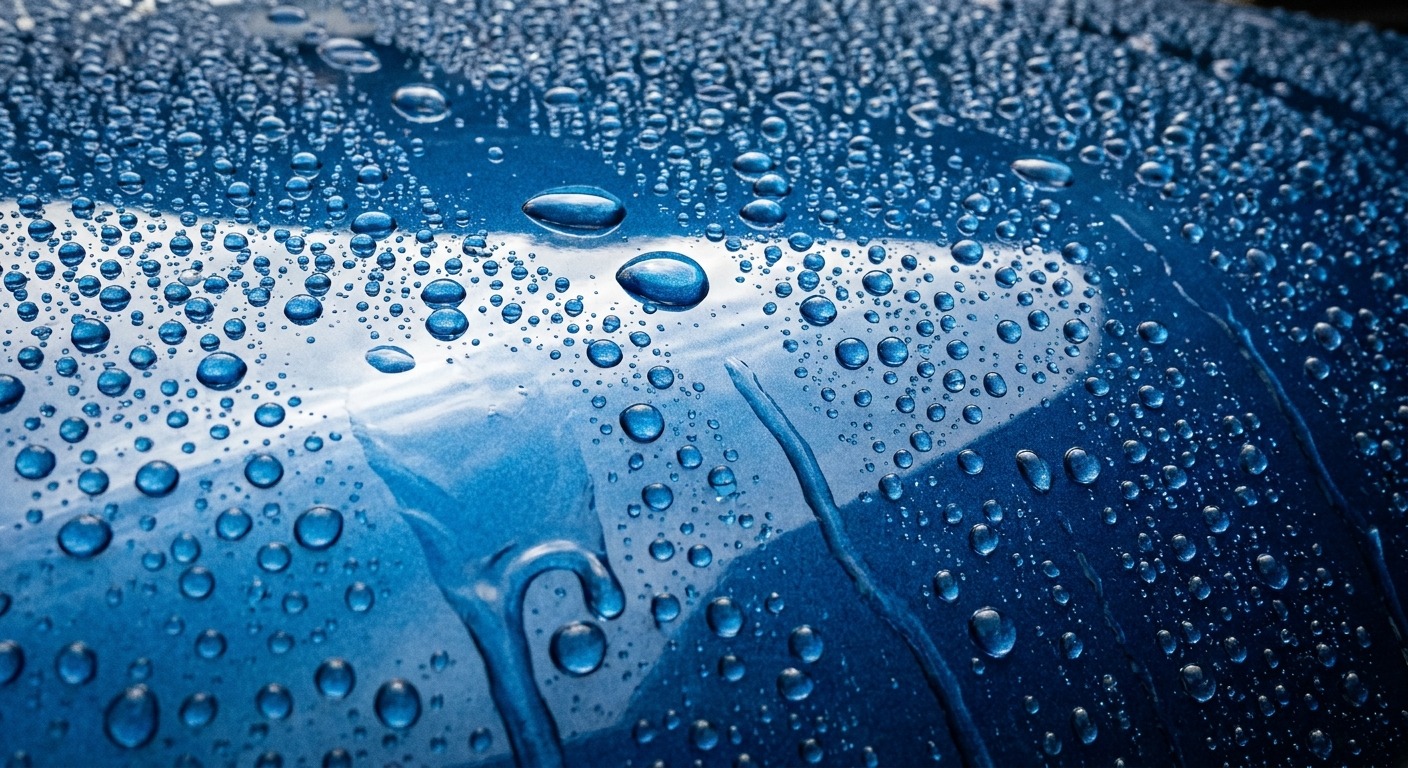
Ceramic coatings have become the most hyped product in detailing over the past decade. Scroll through any detailing page and you'll see claims that border on magical — self-cleaning paint, scratch-proof surfaces, permanent protection. The reality is more grounded, but still genuinely impressive. A ceramic coating is one of the best protection options available for your paint. You just need to understand what it actually does, what it doesn't do, and what it demands from you in return.
What's Actually in the Bottle
Most consumer and professional ceramic coatings are based on silicon dioxide (SiO2) — the same compound that makes up quartz and glass. Some formulations incorporate titanium dioxide (TiO2) for additional UV resistance or hardness. When applied to a vehicle's clear coat, the liquid SiO2 fills the microscopic pores and imperfections in the surface and bonds chemically to the paint through a process called cross-linking.
As the coating cures — which takes anywhere from a few hours for initial hardness to several weeks for full chemical cure — it forms a semi-permanent glass-like layer on top of your clear coat. This layer is typically 1 to 3 microns thick, which is invisible to the naked eye but measurable and functional.
The chemistry matters because it explains both the strengths and limitations of the product. SiO2 is hard and chemically inert, which is why it resists UV, acids, bird droppings, and most chemicals so well. But it's also brittle at the thicknesses we're talking about, which is why it doesn't absorb impact — a rock chip goes right through it.
What Ceramic Coatings Actually Protect Against
Here's where coatings genuinely earn their price:
UV radiation. UV light is the primary cause of paint oxidation and fading, especially on red and black vehicles. The SiO2 layer acts as a UV filter, dramatically slowing the oxidation process. In a country like Canada where summer UV can be intense and winter sun reflects off snow, this is meaningful protection for your clear coat's longevity.
Chemical exposure. Bird droppings, bug splatter, tree sap, road salt, calcium chloride — these all attack clear coat. A coated surface resists chemical etching far better than unprotected paint. Bird droppings on unprotected paint in direct sun can etch the clear coat permanently in hours. On a coated surface, you have significantly more time before damage occurs. Not infinite time — don't leave it for a week — but meaningfully more resistance.
Water spotting. The hydrophobic surface causes water to bead and sheet off rather than sitting and evaporating in place, reducing mineral deposit formation. Particularly valuable in areas with hard municipal water.
Light scratching and swirl resistance. The hardness of a cured SiO2 layer provides some resistance to fine marring and swirl marks that come from regular washing. Not scratch-proof, but it takes more to mark a coated surface than an uncoated one.
Ease of cleaning. This is the day-to-day benefit most owners notice first. Dirt, grime, and road film don't bond as strongly to the slick, hydrophobic coated surface. Washes are faster. Contamination rinses off more easily. Clay bar treatments are needed far less frequently. If you wash your own vehicle, this alone can justify the cost over time.
What Ceramic Coatings Don't Protect Against
And here's where the marketing often lies by omission:
Rock chips. A 1-to-3-micron glass layer does nothing against a piece of gravel hitting your hood at highway speed. The coating is too thin and too brittle to absorb that kind of impact. If rock chip protection is your goal, paint protection film (PPF) is the product you want — and it can be combined with a ceramic coating on top.
Deep scratches. Any scratch that penetrates the clear coat goes through the ceramic coating as if it weren't there. A key scratch, a shopping cart hit, or a branch dragged across the panel will damage coated paint just like uncoated paint. The coating protects against micro-marring, not mechanical damage.
Existing paint defects. A ceramic coating is transparent. It doesn't fill or hide swirl marks, scratches, or oxidation. Whatever your paint looks like when you apply the coating is what it will look like after — but locked in and harder to remove. This is why proper paint correction before coating is essential, not optional.
Permanent protection. Despite marketing claims of "lifetime" or "10-year" coatings, all ceramic coatings degrade over time. UV exposure, chemical exposure, physical abrasion from washing, and environmental factors all break down the SiO2 layer gradually. Realistic expectations for a professional-grade coating are two to five years with proper maintenance. Consumer-grade coatings from auto parts stores typically last six months to a year.
A ceramic coating amplifies the condition of your paint. If your paint looks great, it'll look incredible. If your paint is swirled and scratched, those defects will be preserved under a very shiny, very permanent-feeling layer.
Professional vs DIY Application
Professional installation typically costs $500 to $1,500 or more in Canada, depending on the size of the vehicle, the coating product used, and whether paint correction is included. That price buys you surface preparation, correction if needed, proper application in a controlled environment, and usually a warranty on the coating itself.
DIY ceramic coating products are widely available and significantly cheaper — $50 to $150 for enough product to coat an entire vehicle. The application process isn't technically difficult: wipe on in a crosshatch pattern, wait for the product to flash (turn hazy), then buff off. The challenge is surface preparation and environment.
The coating needs to go on clean, decontaminated, corrected paint in a dust-free environment between roughly 15 and 25 degrees Celsius. If you have a clean garage, patience, and decent surface prep skills, DIY coating is very achievable. If you're working outside in variable conditions, you'll have a harder time getting consistent results.
Pro tip: Whether you go professional or DIY, the coating is only as good as the prep underneath it. A $1,500 professional coating over uncorrected, contaminated paint is worse than a $75 DIY coating over properly corrected and decontaminated paint. The prep is the job. The coating is just the last step.
Maintenance Requirements
This is where a lot of new coating owners get surprised. A ceramic coating doesn't eliminate the need to wash your vehicle — it makes washing easier and less frequent, but it still needs to happen. Neglecting a coated vehicle will degrade the coating faster and allow contamination to build up that defeats the hydrophobic properties.
A proper maintenance routine for a coated vehicle includes:
- Regular washing using the two-bucket method with a pH-neutral shampoo. Avoid harsh detergents and automatic car washes with brushes — they accelerate coating wear.
- Periodic decontamination with an iron remover spray every three to six months. Even coated surfaces collect iron fallout from brake dust and rail dust, and iron removers dissolve it chemically without physical abrasion.
- Maintenance spray or topper applied every two to four months. These are SiO2 spray sealants that refresh the hydrophobic properties and add a sacrificial layer on top of the coating. Think of them as sunscreen for your coating.
- Avoid letting contaminants sit. Bird droppings, tree sap, and bug splatter should still be cleaned promptly. The coating gives you more time before etching occurs, but it doesn't give you infinite time.
What About Spray Ceramic Products?
The market is now flooded with "ceramic" spray sealants, waxes, and quick detailers. These typically contain a small percentage of SiO2 and provide some of the hydrophobic and protection benefits of a true ceramic coating, but at a fraction of the durability. Expect a few weeks to a few months of protection rather than years.
These spray products are excellent as maintenance toppers for a true ceramic coating, and they're a reasonable alternative if you're not ready to commit to a full coating application. They're easy to apply, forgiving of imperfect technique, and cheap enough to reapply frequently. But they're not a substitute for a proper coating — the bonding chemistry, thickness, and durability are fundamentally different.
Is It Worth It?
For a vehicle you plan to keep for several years and maintain properly, a ceramic coating is one of the better investments in vehicle care you can make. The protection is real. The ease of maintenance is significant. The appearance, when applied over properly corrected paint, is outstanding.
For a vehicle you're selling soon, a beater commuter you don't wash regularly, or a vehicle that lives outside and never gets maintenance — the return on investment drops sharply. A ceramic coating needs maintenance to perform. If you're not going to maintain it, a quality sealant reapplied a few times a year gives you most of the protection at a fraction of the cost and commitment.
In Canadian conditions specifically, the chemical resistance alone makes a strong case. Our road salt and calcium chloride are brutal on clear coat, and a ceramic coating provides a meaningful barrier against that seasonal assault. Pair it with a proper interior care routine and your vehicle will hold up far better than the average Canadian daily driver that gets nothing but touchless washes and an annual wax. Some shops that offer mechanical service have started adding detailing as part of their service menu — worth checking if your regular mechanic can handle both the coating and the seasonal maintenance in one visit.